

Salt Marsh: An Inshore Fishing Guide
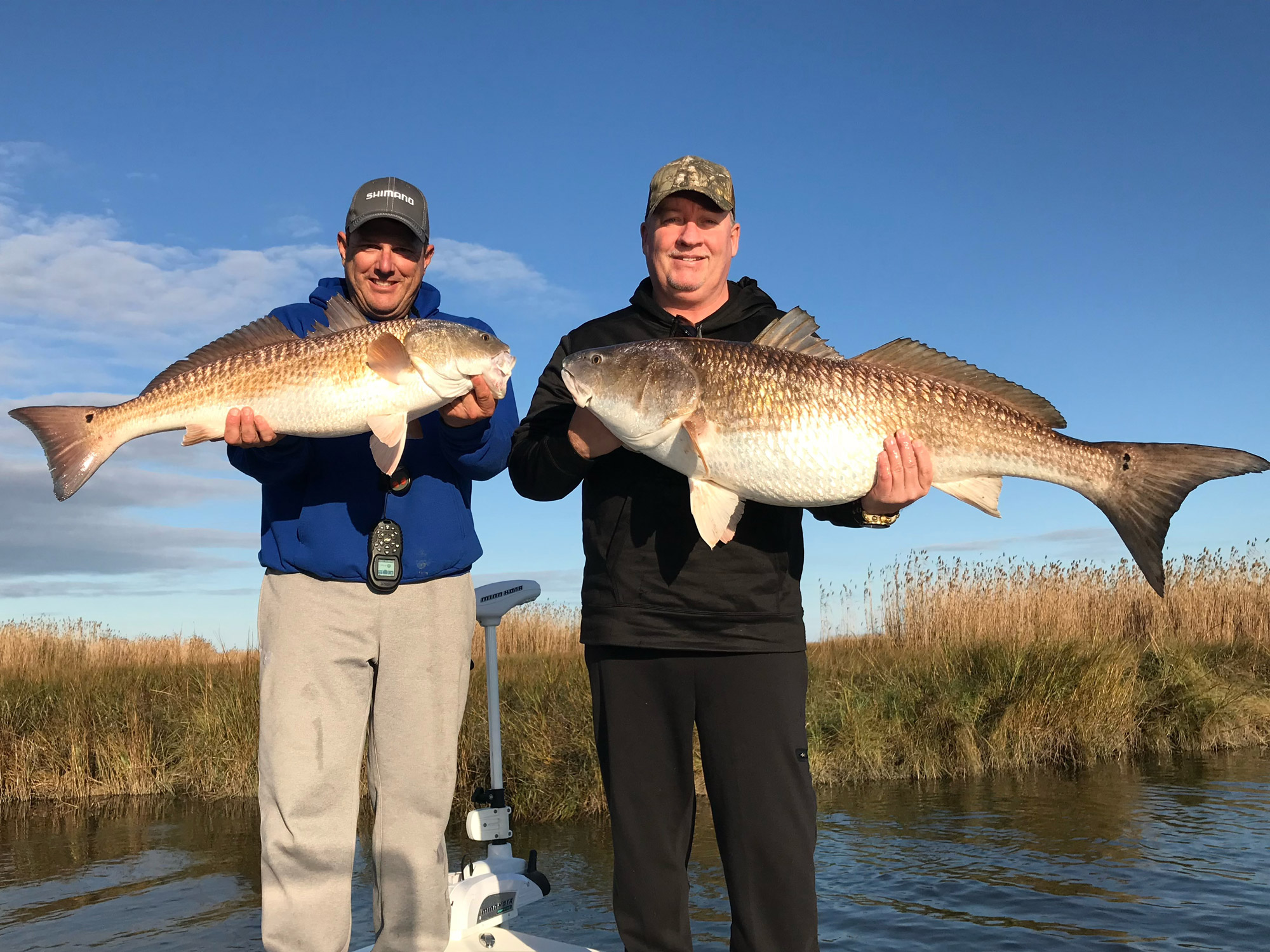
In many areas, redfish are the stars of the salt marsh.
Anthony Randazzo


For fishing, the salt marsh is one of the most consistently dependable of coastal habitats. Simply unmistakable, the vast acreage of swaying grasses, muddy creeks, oyster bars and random blown-in wood offers ideal fishing potential for power boaters, as well as kayakers.
From the Gulf to the Carolinas, you’ll find localized preferences, but the game remains the same. Tons of habitat, constant food production, and a variety of gamefish piling into easily definable areas creates a target-rich scenario.
Offering an explanation that generally holds true for any Southern salt marsh, Venice, Louisiana’s Capt. Anthony Randazzo, of Paradise Plus Guide Service, offers a seasonal summary: “We experience productive marsh fishing during winter, spring and fall. Generally, hot summer months are much slower in the stagnant shallow water in the marsh. The fish gravitate toward deeper and cooler water with the proper amount of oxygen.”
Knowing this general schedule, plan your salt marsh visits and select your launch sites to capitalize on the best opportunities.
Willing to hit soft plastics or live baits fished near the bottom, flounder often post-up in ambush around marsh drains.
David A. Brown
Gamefish of the Salt Marsh
Throughout Southern waters, redfish headline the marsh mix. Built like tanks, reds are perfectly designed for grazing around shell bottom, rooting crustaceans and invertebrates out of the mud, picking crabs and snails out of marsh grass fields, and chasing down various baitfish from minnows to menhaden.
Black drum, with their taller profile and black/white vertical striping often overlap with redfish and follow similar feeding habits. But don’t confuse black drum with sheepshead, which also sport convict striping. Sheepshead have more vertical bands, distinctive sheep-like teeth and long, sharp dorsal spines.
Other popular marsh species include spotted seatrout, flounder, jack crevalle, and juvenile sharks. In Florida and southern Texas, you can add snook to that list.
Vast acres of seagrass cut through with creeks offer unlimited area to explore in search of fish.
David A. Brown
Key Fishing Areas in the Marsh
Notwithstanding local favorites and “community holes,” coastal marshes offer boundless opportunity for intrepid anglers. This deeply alluring habitat beckons you farther and farther onto the labyrinth, where you’ll often chance your way into a bite or two. However, taking a logical approach will better reward your marsh fishing effort.
“Marsh environments are diverse, especially here in the (Mississippi) Delta, so we try to focus on shallow flats, but all flats are different,” Randazzo said. “I prefer flats in 1.5 to 3 feet of water that are close to slightly deeper water, have some sort of grass or shell present, and have the benefit of moving water when the tide is flowing.”
In Jacksonville, Florida, Capt. Chris Holleman’s list of fish-friendly salt marsh features starts with creek mouths, where outgoing tides facilitate feeding by bringing baitfish and crustaceans into predictable areas. He’s also big on oyster bars, as these jagged accumulations present ample habitat for crabs, shrimp, worms and various baitfish.
Broken marsh with clumps of grass, cuts and small lagoons is prime habitat that’s attractive to gamefish and forage.
David A. Brown
Best Marsh Fishing Features
Cuts and Drains:
Water funneling between dense vegetation accelerates current and creates concentrated feeding spots.
Broken Marsh:
A solid line of marsh grass certainly does good things for forage production, but patchy marsh sections with clumps here, clumps there, gaps, breaks and small lagoons — that’s a prime feeding area because fish can easily traverse the cover. If you’re into sight fishing, broken marsh habitat offers shots at tailing redfish, as well as blind shots at fish waking through the grass, parting stalks and swirling to catch a crab or baitfish.
Islands:
Isolated patches of marsh grass often attract bigger, savvy fish that don’t care to bump around with the crowds.
Wading birds lined up on a mud bank is evidence of available forage.
David A. Brown
Promising Signs:
Leaping mullet, schooling baitfish that wiggle and dimple the surface, high spots bristled with fiddler crabs, wading birds lining a muddy bank, or diving birds like cormorants or mergansers that indicate baitfish. Take all of these as indicators of lively areas likely to hold game fish.
And don’t assume the salt marsh action ends at the marsh edge. Around smaller drains and run-outs, mobile predators often patrol the boundaries, while flounder stake-out these food lanes and utilize a lie-in-wait strategy.
Fish the Marsh Tides
Think of water level as a theme-park tour guide leading eager visitors progressively farther into areas of interest, until closing time approaches and the crowds are ushered out. That’s what daily tidal fluctuation does for marsh residents and the anglers who seek them.
“Tides dictate when and where fish will feed in the marsh,” Randazzo said. “When there is little or no tide (0.1- to 0.7-foot range), our fish will feed when and where we find wind-driven water. With slightly stronger but more normal tides, our fish will feed throughout the rising tide and the falling tide on average tide ranges (0.8 to 1.5 feet).
“Conversely, during monster tide ranges (1.6- to 2.6-feet), the fish will feed at the top of the rising tide and bottom of the falling tide, because these stages see the slowest moving water. This allows the fish to feed without exerting too much energy.”
Exercise caution when running in the marsh, as deep creeks at high tide can be nearly dry hours later.
David A. Brown
Randazzo explained that when the tide is moving the hardest, he typically finds most fish deeper in the interior marsh where the water might not move much or at all on an average tide. And during periods of minimal tidal movement, he fishes the marsh exterior, closest to open water.
It’s important to note that entering a marsh on rising or high water usually fosters an eagerness that pulls you progressively deeper into this realm of seemingly limitless opportunity. Just don’t lose track of the tide schedule, how far you are from the exits, or how many skinny bars and mud banks you’ll have to negotiate on your way out.
Many are the tales of anglers who waited too long to depart their inner marsh excursion, only to find the route drained of navigable water. Pace yourself, use waypoints or visual markers to tell yourself how far you’ve traveled and — most importantly — how far you are from safer depths.
At any tide stage, beware the soft bottoms common to marsh habitat. South Carolina’s gooey pluff mud takes this to another level, with a sticky snare that’ll grip boat hulls and legs. But proceed with extreme caution wherever falling water exposes oatmeal bottom. Get yourself stuck in this stuff, and you’re going to be there a while — with the sand gnats and the horseflies.
Marsh Fishing Tactics
You won’t go wrong with live shrimp or cut bait, but this is a slower style of fishing, and you’ll deal with a lot of catfish and stingray bycatch. Artificials allow more targeted casts and greater repetition to cover water and break down the vast habitat.
Lure choices vary, but consider water clarity. Mud is a common marsh reality, so bigger, brighter, louder presentations tend to excel in lower visibility.
On the other hand, heavily vegetated areas keep the water filtered gin clear. Even in areas with muddy, staining influences, when full tides dump out of that marsh grass, the natural filtration expels plumes of clean water and attracts baitfish clusters, which create predator magnets.
There’s an array of lures that work on marsh predators, and anglers in each coastal region have local favorites.
David A. Brown
Best Fishing Lures for the Salt Marsh
Holleman does a lot of his searching with a Heddon Saltwater Super Spook Jr. Most who rely on topwaters to “find” aggressive fish will keep a subsurface bait like a lead-head jig with a paddletail or a soft-plastic jerkbait handy for follow-up shots at fish that either miss a topwater bite or show their position by following or swirling behind the bait.
For reaching into the water column, shallow-diving lures like the Booyah Flashpoint Jr. and the Cotton Cordell Redfin, along with suspending baits such as the MirroLure MirroDine will tempt marsh fish. Here, Randazzo likes soft plastics matched with heavy duty jig spinners as well as shallow-diving crankbaits. Similarly, retrieving a bladed jig through scattered marsh grass can produce fireworks.
In Georgia’s famous Golden Isles marsh tucked between mainland Brunswick and Jekyll and St. Simons islands, Capt. Greg Hildreth often arms his clients with one of the most effective and user-friendly of marsh tools — the popping cork. Rigging a live shrimp on a No. 4 kahle hook and hanging it on a 2 1/2-foot leader under a Bomber Saltwater Grade Paradise Popper XTreme allows anglers to chug and pop the cork to attract attention from trout and other gamefish.
Predators respond to the commotion and then find the vulnerable bait too easy to resist. Adjusting cadence and intensity to match the day’s complexion helps you dial in what the fish want.
Elsewhere, anglers may opt to suspend a jig and paddletail or an artificial shrimp under the cork. In any case, the popping cork rig casts well, it offers an immediate strike detector and it facilitates targeted drift presentations.
“I’ll target rips around oyster beds during the pull of the tide,” Hildreth said. “Some points are better on the incoming tide, and some are better on the outgoing. You just have to scout around.
There are intricacies to tides and structure in a salt marsh habitat that can make learning small areas well more productive than running and gunning.
David A. Brown
One Last Tip
Ultimately, Randazzo expects his best marsh opportunities in areas with cleaner water, ample food supplies and water moving through/past strategic feeding spots. Closing with a strategy tip, he suggests a measured approach to prospecting a vast marsh.
“I advise fishing relatively small areas (less than 5 square miles),” Randazzo said. “Get to know one area intimately before moving around to new areas.
“There are so many little intricacies that take time to learn that you will benefit far more from spending extra time in one area before striking it off your favorites list and moving to other areas.”
“I’ll throw out the cork rig, keep one finger on my open bail and just let the rig float downcurrent. You’re covering a lot of ground that way.”